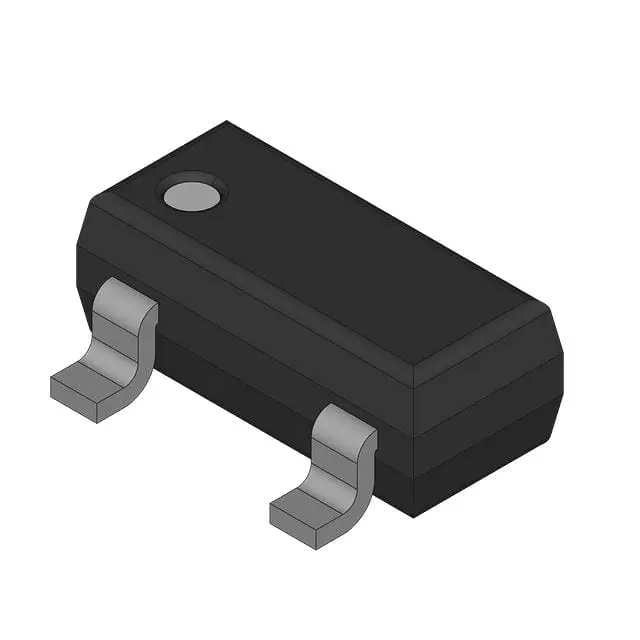
Bilder sind nur zur Referenz
PESD2CAN,215
TVS DIODE 24VWM 41VC TO236AB
- Hersteller
- Fr. Teil #PESD2CAN,215
- Paket SOT23-3
- Datenblatt PESD2CAN,215 DataSheet
- Auf Lager5942
100% Original und Neu
24 Stunden bereit zum Versand
365 Tage Garantie
RFQ & Erhalten Sie mehr Rabatte
Spezifikationen
| Package | Tape & Reel (TR),Cut Tape (CT) |
| Series | Automotive, AEC-Q101 |
| ProductStatus | Active |
| Type | Zener |
| BidirectionalChannels | 2 |
| Voltage-ReverseStandoff(Typ) | 24V (Max) |
| Voltage-Breakdown(Min) | 26.2V |
| Voltage-Clamping(Max)@Ipp | 41V |
| Current-PeakPulse(10/1000µs) | 5A (8/20µs) |
| Power-PeakPulse | 230W |
| PowerLineProtection | No |
| Applications | Automotive, CAN |
| Capacitance@Frequency | 25pF @ 1MHz |
| OperatingTemperature | -55°C ~ 150°C (TA) |
| MountingType | Surface Mount |
| Package/Case | TO-236-3, SC-59, SOT-23-3 |
Übersicht
Description
This diode features low clamping voltage and fast response time, which are critical in minimizing the risk of damage during voltage spikes. It typically has a breakdown voltage that makes it suitable for protecting devices operating at lower voltage levels, such as those in consumer electronics, industrial automation, and automotive applications.
PESD2CAN,215 can be integrated easily into circuits due to its compact package size, which allows for efficient PCB layout. Its robust design ensures it can withstand multiple ESD strikes, making it a reliable choice for manufacturers aiming to enhance the durability of their products. Overall, PESD2CAN,215 is essential for safeguarding electronic systems and ensuring uninterrupted performance in increasingly sensitive applications.
Features
1. Low Clamping Voltage: Protects sensitive components from over-voltage conditions with minimal voltage drop.
2. Bidirectional Protection: Suitable for both positive and negative voltage spikes, making it ideal for CAN bus lines.
3. High ESD Rating: Typically conforms to IEC 61000-4-2 standards, ensuring high resistance to ESD events.
4. Compact Package: Available in small form factors such as SOT-23 or similar, facilitating design in space-constrained applications.
5. Low Capacitance: Minimizes signal distortion, preserving the integrity of high-speed data transmission.
6. Multiple Channels: Supports protection for multiple data lines, consolidating design complexity.
7. Automotive Qualification: Meets automotive standards, ensuring reliability in harsh environments.
These features make PESD2CAN a critical component for safeguarding CAN bus communications in automotive and industrial applications.
Package
Pinout
Pin Functions:
1. Pin 1 (I/O1): Connects to the CAN bus line (CANH or CANL) for protection against electrostatic discharge (ESD) and transients.
2. Pin 2 (I/O2): Also connects to the second CAN bus line, providing similar protection.
3. Pin 3 (GND): Connects to the ground reference of the circuit.
This device helps to protect sensitive automotive electronics from voltage spikes, ensuring reliable operation in automotive networking environments.
Manufacturer
Application
Equivalent
1. ESD5Z3.3 (Nexperia)
2. ESDA6V1L1 (STMicroelectronics)
3. ESD5Z5.0 (Nexperia)
When selecting an equivalent, ensure similar specifications like voltage ratings and ESD protection levels.
Versand
VersandmethodenWir
bieten Sie globale Versanddienstleistungen durch DHL, FedEx, TNT, UPS oder einen anderen Spediteur Ihrer Wahl.
Versandgebührenreferenz (DHL/FedEx):
DHL: Versandkosten reichen von $25-$45 (0.5kg), mit einer geschätzten Lieferzeit von 2-5 Werktagen.
von FedEx: Versandkosten reichen von $25-$40 (0.5kg), mit einer geschätzten Lieferzeit von 3-7 Werktagen.
UPS: Versandkosten reichen von $25-$45 (0.5kg), mit einer geschätzten Lieferzeit von 3-7 Werktagen.
TNT: Versandkosten reichen von $25-$65 (0.5kg), mit einer geschätzten Lieferzeit von 3-7 Werktagen.
EMS: Versandkosten reichen von $30-$50 (0.5kg), mit einer geschätzten Lieferzeit von 7-15 Werktagen.
Registrierte Luftpost: Versandkosten sind $ 2- $ 4 (0,1 kg), mit einer geschätzten Lieferzeit von 5-20 Werktagen.
Zahlungen
Payment Methods
Die Zahlungsfrist ist 100% Prepaid.
Derzeit akzeptieren wir nur die folgenden Zahlungsmethoden:
1. PayPal
2. Kredit- / Debitkarte
3. Überweisung
Ähnliche
-
![MX25V1635FZNI]() MX25V1635FZNI
MX25V1635FZNI
Macronix
-
![MX29F400CBTI-70G]() MX29F400CBTI-70G
MX29F400CBTI-70G
Macronix
-
![MX29GL512FHXFI-11G]() MX29GL512FHXFI-11..
MX29GL512FHXFI-11..
Macronix
-
![MX25U51279GXDR00]() MX25U51279GXDR00
MX25U51279GXDR00
Macronix
-
![MX25L2006EM1I-12G]() MX25L2006EM1I-12G
MX25L2006EM1I-12G
Macronix
-
![MX25L12833FZNI-10G]() MX25L12833FZNI-10..
MX25L12833FZNI-10..
Macronix
-
![MX25L12835FZ2I-10G]() MX25L12835FZ2I-10..
MX25L12835FZ2I-10..
Macronix
-
![MX29LV160DTTI-70G]() MX29LV160DTTI-70G
MX29LV160DTTI-70G
Macronix
-
![MX29F040CTI-70G]() MX29F040CTI-70G
MX29F040CTI-70G
Macronix
-
![MX29F800CBTI-70G]() MX29F800CBTI-70G
MX29F800CBTI-70G
Macronix
-
![MX30LF4G18AC-TI]() MX30LF4G18AC-TI
MX30LF4G18AC-TI
Macronix
-
![MX66U1G45GMI00]() MX66U1G45GMI00
MX66U1G45GMI00
Macronix